
What Should a Personal Trainer Course Actually Prepare You For?
Knowing how to demonstrate a squat is useful.
But what happens when a client doesn’t understand your instructions? What if they repeatedly miss sessions, lose confidence or stop making progress? How do you change their programme without losing sight of what they’re trying to achieve?
Then a client tells you they’ve been diagnosed with a medical condition. Can you continue training them? Do you need to adapt their programme, refer them to another professional or stop training them altogether?
And then there’s the business side.
Where are your clients going to come from? What should you charge? What insurance do you need? What records should you keep? How do you know whether your personal training business is actually working?
These are all part of being a personal trainer.
A recognised qualification matters because it gives you the knowledge and occupational skills needed to enter the profession. But choosing a personal trainer course isn’t just about finding a qualification with the right name.
You also need to think about how the course provider will help you understand, practise and apply what the job actually demands.

A personal trainer qualification should prepare you for the job
The Active IQ Level 3 Technical Occupational Entry in Personal Training is designed to prepare learners to enter the personal training industry.
It covers much more than exercises and programme templates. The qualification includes six mandatory areas:
applied anatomy and physiology;
nutrition for exercise and health;
lifestyle, wellbeing and common medical conditions;
positive health and fitness behaviours;
programme design and delivery;
professionalism and business acumen.
Within those areas, learners are expected to develop skills around consultation, health screening, behaviour change, programme design, risk stratification, technology, professional responsibilities, marketing, finance and business planning.
That reflects what personal training actually involves.
You’re not just writing workouts. You’re working with people, interpreting information, making decisions, managing risk, explaining what you’re doing and building professional relationships.
Your qualification gives you the foundation.
The way your provider teaches it can make a big difference to how confident you feel applying it.
You need to learn how to work with the person, not just the programme
Clients don’t arrive as blank programme templates.
Someone might tell you that they want to “get fitter”, but that doesn’t tell you very much.
What does fitter mean to them? Why is it important? What have they tried before? What usually gets in the way?
Different people will also respond differently to coaching.
One person might want a detailed explanation of what they’re doing. Someone else might understand much better if you demonstrate it. Another client might need more reassurance, while someone else might respond better to clear accountability.
The Active IQ qualification includes consultation, establishing rapport, assessing readiness to change, goal setting and adapting your own communication style. Learners must also demonstrate how they create an environment that motivates and empowers clients.
These can be easy skills to overlook when you’re thinking about becoming a PT.
But they matter.
Knowing the right exercise is only useful if you can explain it in a way your client understands. A good programme won’t get very far if the client doesn’t feel confident enough to follow it.
So, when you’re comparing course providers, ask how communication and coaching are actually developed. Is it mainly discussed in theory? Or will you have opportunities to practise consultations, demonstrate exercises, coach other people and receive feedback?
There’s a big difference between understanding how good coaching works and having to do it yourself.
You should be able to design, coach and adapt training
Writing a list of exercises into a programme is only one part of programme design.
You need to understand why you’ve chosen them.
The qualification requires learners to design and instruct safe and effective personal training programmes and session plans, review client progress and adapt their approach appropriately.
That means looking at the information in front of you and making decisions.
A client might struggle with an exercise you expected them to manage. Their technique might change as they become tired. Their progress might be quicker or slower than expected.
Sometimes the programme you wrote on paper simply won’t work as well as you thought it would.
That’s normal.
What matters is whether you have enough understanding to recognise what needs changing and why.
Your course should help you develop the ability to:
design progressive programmes around individual needs and goals;
explain the reasoning behind your choices;
adapt exercise complexity, volume or intensity;
monitor and review progress;
evaluate your own coaching.
This is where practical learning matters.
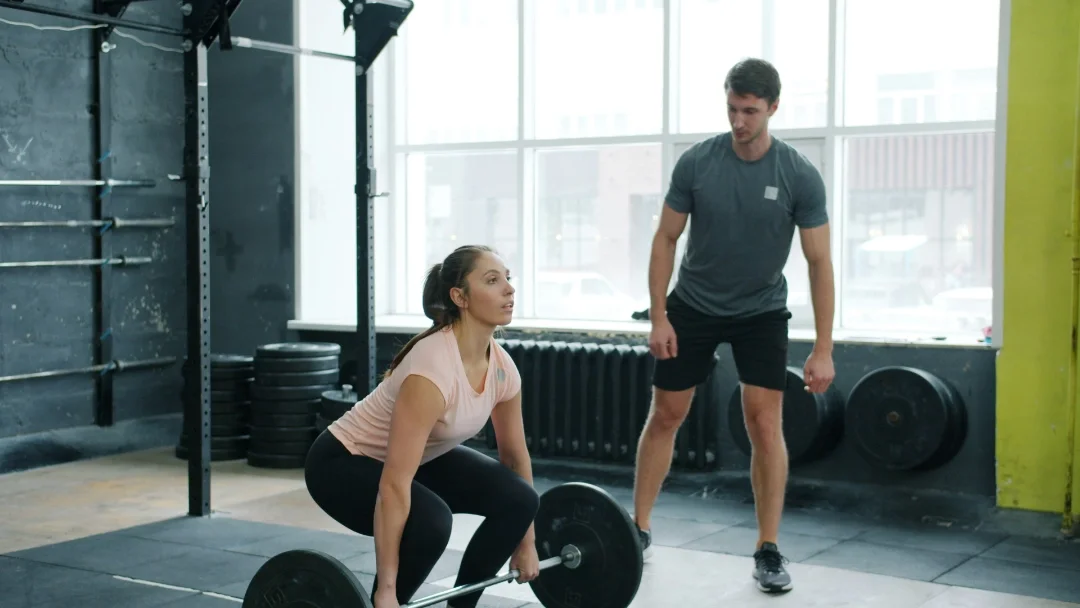
Watching someone demonstrate an exercise and coaching someone yourself are not the same thing. You only really find out whether your explanation works when another person is standing in front of you.
When comparing providers, ask how much supervised practical training is included and what you’ll actually be doing during that time.
A practical day shouldn’t just mean being physically present in a gym.
You should be coaching, observing, correcting, discussing decisions and getting feedback.

You should understand when something is outside your role
Being a professional personal trainer doesn’t mean knowing the answer to everything, or even saying “yes” to everyone.
Sometimes the right decision is recognising that something sits outside your scope of practice or knowledge.
The Active IQ qualification includes professional and legal requirements, risk stratification and working with clients who have commonly occurring medical conditions. It also covers accessing credible health and nutrition information.
As a PT, you might need to decide whether someone can continue training safely, whether an exercise needs adapting or whether the client should be referred to another professional.
You’ll also be responsible for things like client information, consent, records and the appropriate use of data. These responsibilities are easier to understand when you can apply them to realistic situations.
Learning that you should refer somebody is useful.
Working through a scenario and deciding when you would refer them and why is much more valuable.
When you’re speaking to a provider, ask how professional boundaries are taught.
Are you simply learning rules for an assessment, or will you have opportunities to work through situations you could actually encounter with a client?

Business knowledge is part of becoming a PT
One part of personal training often gets pushed to one side: getting clients in the first place.
You can understand anatomy, design a good programme and become a strong coach.
That doesn’t automatically give you a diary full of clients.
Business knowledge is sometimes treated as an optional extra for people who eventually want to become self-employed.
In the current Active IQ qualification, it isn’t optional. Professionalism and business acumen for personal trainers is one of the six mandatory units.
The qualification includes areas such as professional and legal requirements, marketing strategies, finances and planning a personal training business. Active IQ describes the qualification as giving learners an understanding of business, finance, sales and marketing to help them build and retain a stable client base.
That doesn’t mean you have to set up your own business as soon as you qualify.
You might work for a gym. You might gradually move from another career. You might combine employment with a few private clients. You might decide that self-employment isn’t right for you at all.
But you should still understand how personal training works commercially.
Even in a gym, you may need to start conversations with potential clients, explain what you can help them with and build relationships that encourage people to continue working with you.
A course should help you understand that side of the profession without pretending that completing a business unit guarantees clients or income.
So, how do you choose the right personal trainer course?
Start by asking two different questions.
“Is this the right qualification?”
And:
“Is this the right provider for me?”
They are not the same thing.
Different training providers can deliver the same regulated qualification in very different ways.
Before enrolling, there are a few things worth asking.
What qualification will I actually receive?
Check the awarding organisation and the exact qualification title.
Don’t rely purely on terms such as “PT certificate” or “personal training qualification”.
How much practical training will I actually do?
Ask how many practical sessions there are, but also ask what happens during them.
Will you be coaching other people? Conducting consultations? Practising adaptations? Receiving feedback?
The amount of time matters, but so does what that time is used for.
Who will be teaching me?
Active IQ requires tutors and assessors to have relevant industry experience as well as appropriate teaching and assessment competence.
It’s still worth asking about the people you’ll actually be learning from and the experience they bring into the classroom.
How will I receive feedback?
Practical skills improve through practice and correction.
Find out how tutors give feedback, how often you’ll receive it and whether you’ll have opportunities to try again.
What support will I have outside the classroom?
Think realistically about how you learn.
You might be confident with practical work but struggle with anatomy. You might understand the theory but need more time building confidence coaching other people.
Ask what happens when you get stuck.
How is the business side taught?
Business acumen is part of the qualification.
Ask whether it’s simply something you complete for an assessment or whether the provider helps you understand how it connects to working as a PT.
What happens once I qualify?
A qualification gets you to the starting line.
Ask about career support, industry connections and opportunities to continue developing once your course finishes.
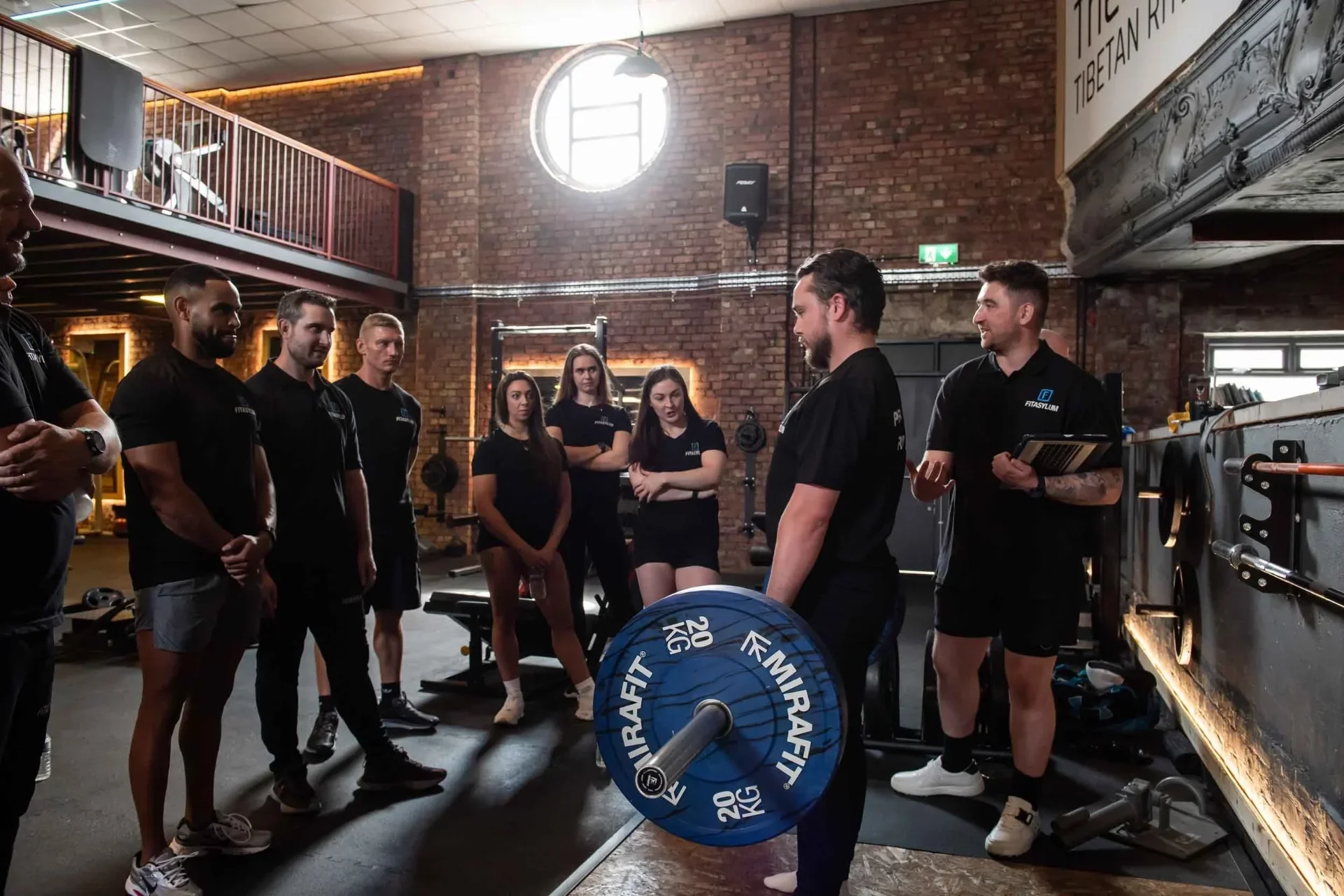
What does this look like at Fitasylum?
At Fitasylum, we’ve built our Personal Training courses around the same principle: qualifying matters, but learners also need time to practise what the job actually involves.
That means our delivery includes substantial face-to-face practical training, with learners spending time coaching, observing, adapting exercises and receiving tutor feedback rather than relying solely on online study.
We also build additional support around the qualification itself such as client profiling, pricing, preparing for self-employment, marketing and client retention to help learners understand what working in the industry can look like beyond the assessment.
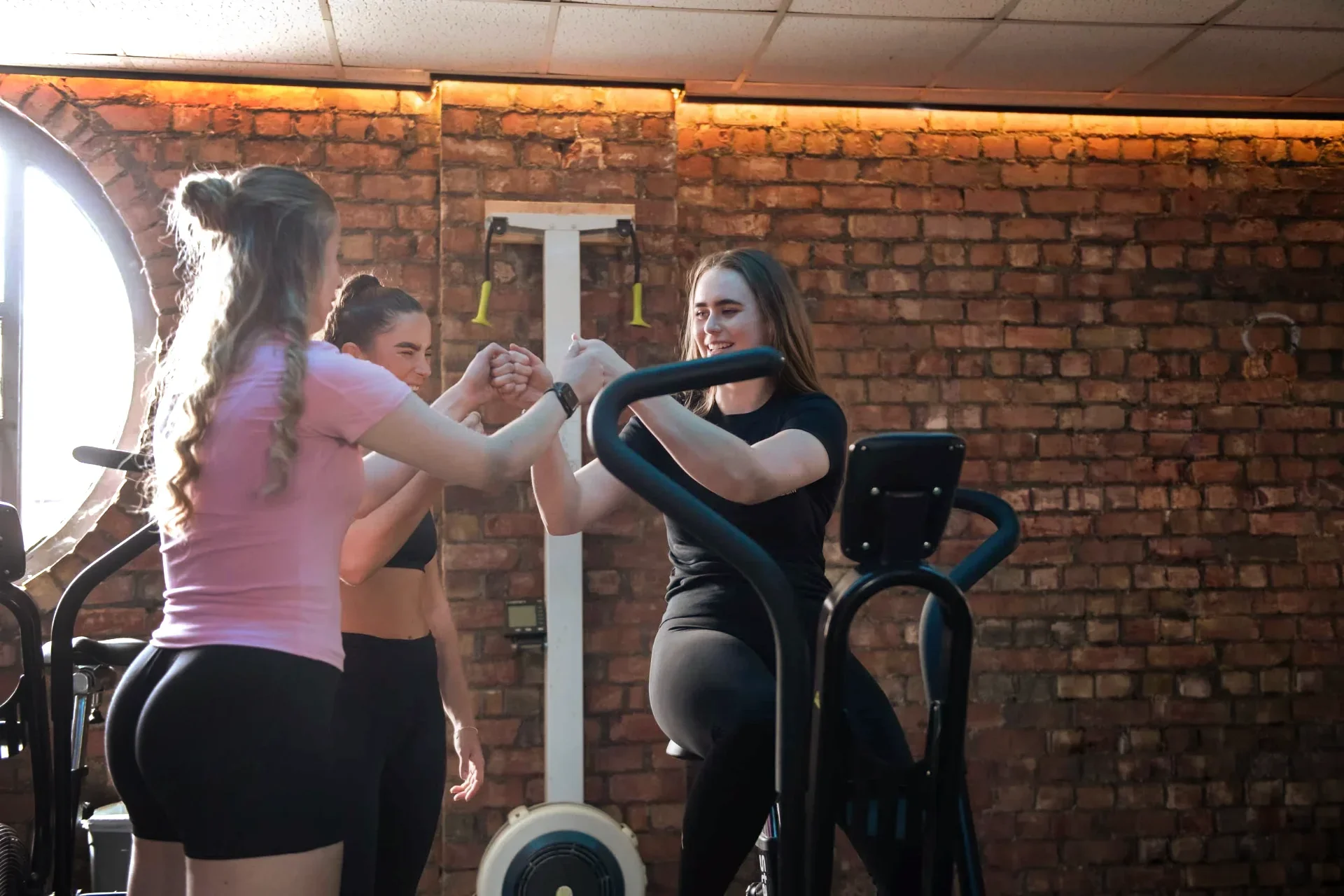
We also provide ongoing business support after the course, so learners have somewhere to take questions as they begin putting what they have learned into practice.
That doesn’t mean there is one correct route into personal training. Some learners want to become self-employed, others want to work within a gym, and some are changing careers gradually.
The aim is to help you leave with more than a qualification: you should understand what the role involves and feel better prepared to take your next step.
The qualification matters. So does how you learn it.
Choosing a personal trainer course shouldn’t just come down to who can get you qualified the fastest.
Equally, a longer course isn’t automatically better.
What matters is what happens during that time.
Are you getting opportunities to practise? Are you making decisions? Are you getting useful feedback? Are you learning how to deal with people rather than just programmes? And are you beginning to understand what working as a personal trainer will actually involve?
Because once you qualify, that’s what you’ll need to be ready for.