Training Older Clients: the coaching principles for over 60’s
When you picture an older Personal Training client, what comes to mind?
Someone completely new to exercise? A client who needs everything made easier? Someone nervous about picking up a weight?
That might describe some older clients. It will be completely wrong for others.
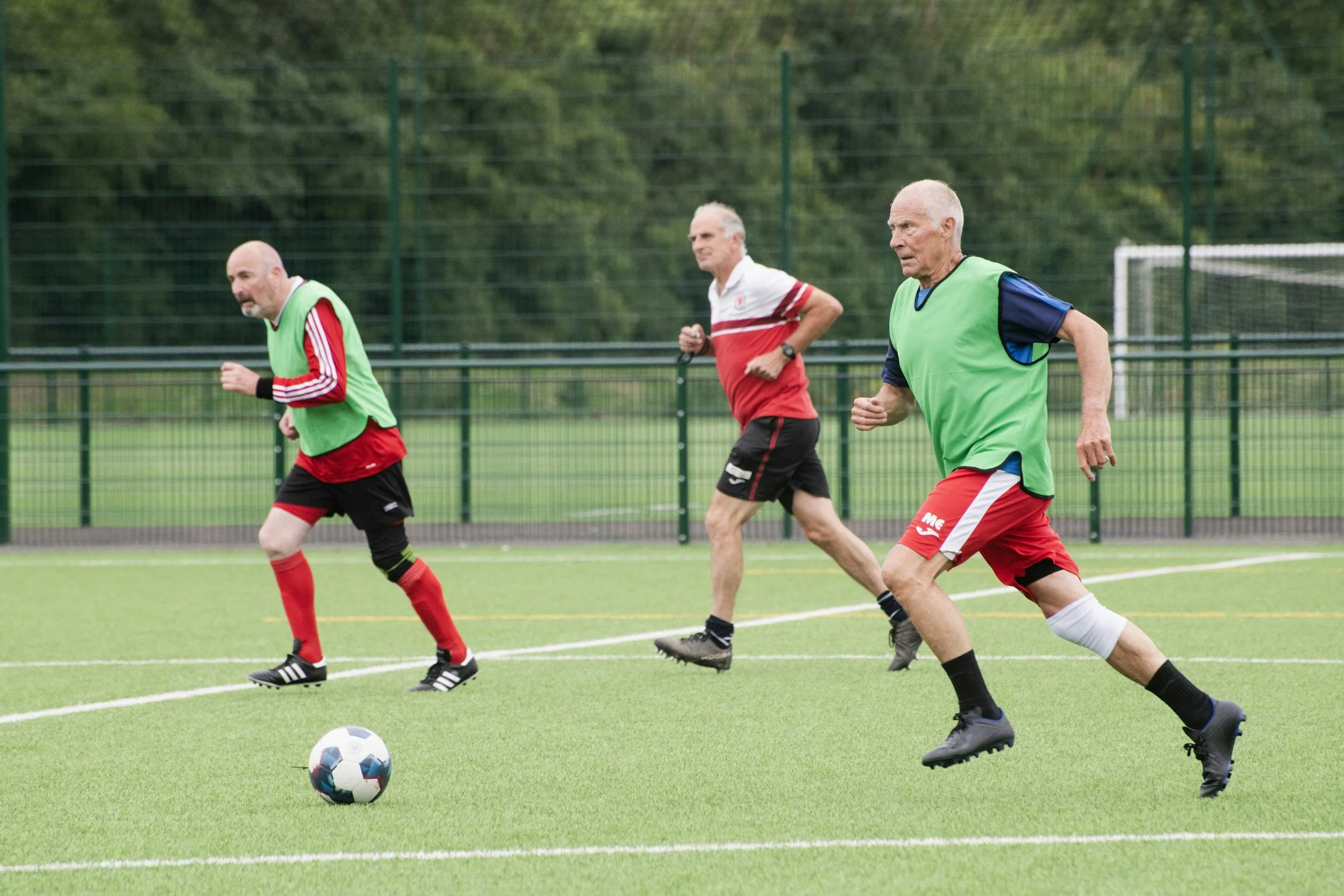
Recent data from Our Future Health offers a useful reality check. Among almost 1.93 million participants who completed its health and lifestyle questionnaire, people aged 60–69 were the age group most likely to meet the physical activity guidelines.
Participants aged 70–79 also reported doing more moderate exercise than any other age group, averaging 278 minutes per week. Even participants aged 80 and over reported more moderate exercise than those aged 18–29.
The findings are based on people taking part in the Our Future Health programme, so they should not be treated as a perfect picture of the entire UK population. But they make one thing very clear:
Older does not automatically mean inactive, inexperienced or in need of a gentler programme.
Older clients don’t need a separate rulebook
There can be a tendency to overcomplicate Personal Training for older clients.
Suddenly, the usual principles of good coaching are presented as though they are a completely different approach.
You need to
Speak to the client
Understand their goals
Complete appropriate health screening
Find out what they can currently do
Choose suitable exercises
Progress the programme
Review how they respond
Sound familiar? It should. This is how you would coach any client.
You would not give every 25-year-old the same programme based on their age. There is no reason to do that with every 65-year-old either.
Age gives you some useful context, but it does not give you a starting weight, exercise selection or training goal.
Don’t confuse “new to the gym” with “new to movement”
An older client may be unfamiliar with a particular gym environment without being unfamiliar with physical activity.
They may have spent years walking, cycling, gardening, dancing, swimming, doing manual work, playing sport or caring for other people. They might understand their body, preferences and physical capabilities extremely well.
Equally, they may be returning after years away from structured activity or starting exercise for the first time.
You will not know until you ask.
A good consultation should explore the life they have already lived, not just collect a list of things they cannot currently do. Ask about what they can do, activities they already enjoy, their previous experiences of exercise and physical work or hobbies.
From there explore;
what has worked for them before;
what has put them off;
what they want to maintain or return to;
what they would like to feel more confident doing.
Their experience does not replace your professional judgement. It gives you the information needed to use that judgement properly.
Respect the person, not the stereotype
Respecting an older client does not mean treating them as fragile. It means recognising that they arrive with their own history, preferences, concerns and reasons for wanting support.
Some may feel confident exercising but unfamiliar with specific gym equipment. Others may worry about being the oldest person in the room, looking out of place or being watched while they learn.
They may have had a previous injury or a poor experience with exercise that has affected their confidence. They may also have encountered people who assume they should slow down simply because of their age.
A Personal Trainer can make that worse by being patronising, offering constant praise for ordinary effort or automatically giving the client the easiest option. On the other hand, dismissing their concerns and pushing ahead is not empowering either.
Respectful coaching sits between the two. You listen to what the client is telling you, explain your decisions and provide an appropriate level of challenge.
That might mean introducing something gradually. It might also mean recognising that the client is capable of more than either of you initially expected.
Don’t assume confidence and ability are the same thing
A client can be physically capable but uncertain in an unfamiliar environment.
They may hesitate before using a piece of equipment because they have never seen it before, not because they lack the strength to use it. They might prefer a clear demonstration because the terminology is unfamiliar, not because they cannot understand instructions.
The reverse can also be true. A confident client may still need an exercise adapted because of their current ability, health information or movement quality.
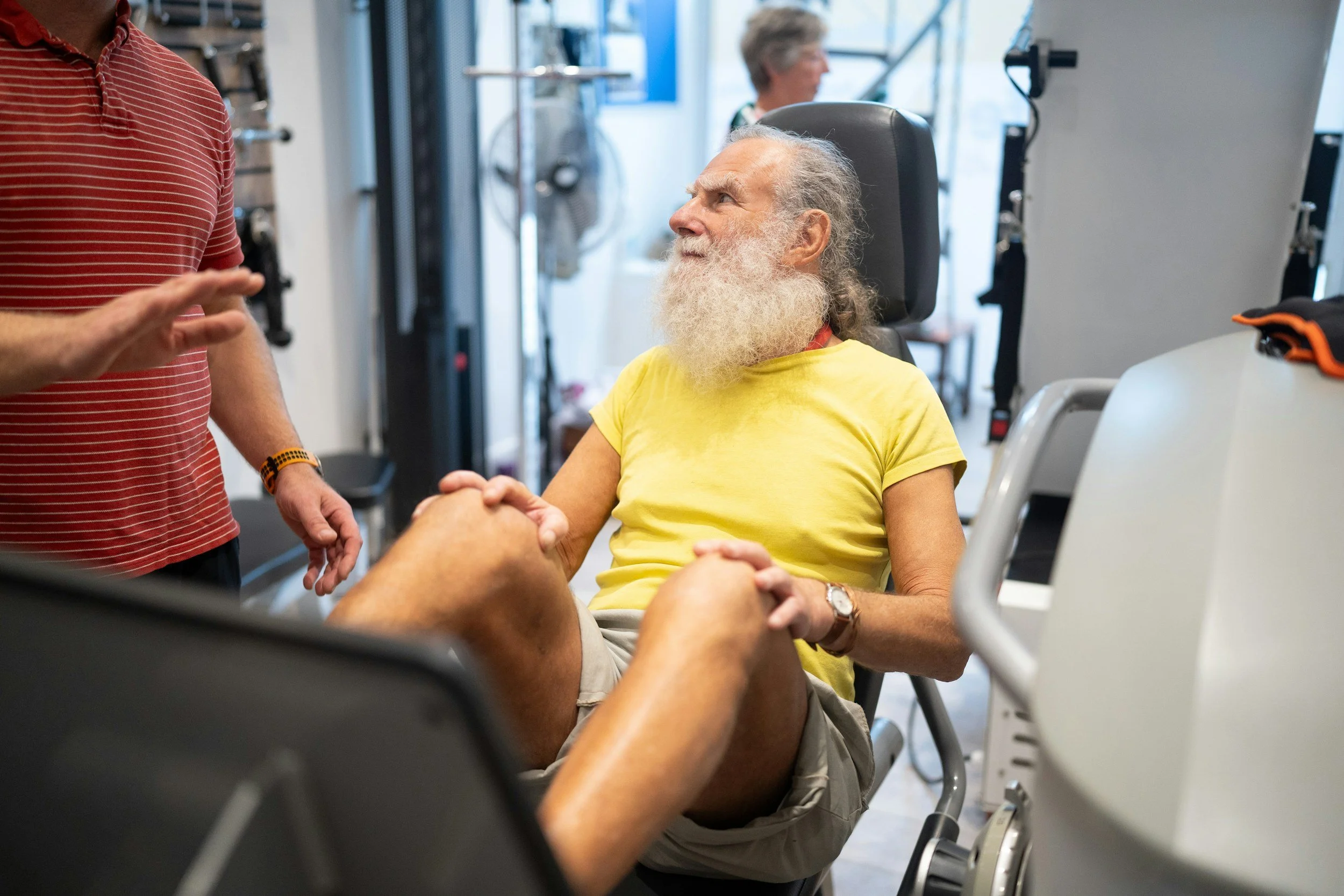
Your job is to work out which is which. That means observing, asking questions and giving the client enough space to tell you what they are experiencing. Again, this is what a good PT should be doing for people at any age.
Appropriate challenge is still part of the job
The UK Chief Medical Officers recommend that adults aged 65 and over include activities that maintain or improve strength, balance and flexibility on at least two days each week.
The World Health Organization’s physical activity recommendations make a useful point: the core recommendations for older adults are broadly the same as for other adults.
Adults aged 65 and over should aim for 150–300 minutes of moderate-intensity activity or 75–150 minutes of vigorous-intensity activity each week, alongside muscle-strengthening activities on at least two days. WHO also recommends varied activity that emphasises functional balance and strength on three or more days each week.
Those are useful benchmarks, but they still do not require a standard “older adult workout”.
One client may need to begin by developing confidence with basic resistance exercises. Another might already be ready for challenging strength training. Someone else may be working towards a long walk, active holiday or sporting event.
The programme should reflect the person’s current ability and goal.
An adaptation should create an appropriate starting point, not become a permanent limit. Once the client is ready, the programme should still move forward.
That is not specialist treatment. It is what a Personal Trainer should already be doing with every client. Making everything easier because somebody is older is not individualisation. It is another assumption.
What actually requires more knowledge?
There is one area where Personal Trainers do need to develop their understanding: how common medical conditions, comorbidities and contraindications can affect exercise.
Older clients are more likely to be managing one or more long-term conditions, although this does not mean every older client will have a condition or that a diagnosis automatically prevents exercise.
The current Active IQ Level 3 Personal Training qualification requires learners to understand common medical conditions, risk stratification and when somebody should be signposted to another professional. It also requires learners to design and justify programmes for ageing clients with specified low-risk conditions.
The important distinction is that a Personal Trainer should understand how relevant health information may influence exercise without attempting to diagnose or medically manage the client. Your client may have been managing their condition longer than you have been a PT.
Sometimes the outcome of your conversation will be a sensible programme adaptation. At other times, further information, medical clearance or referral may be needed.
If you want to work with clients whose conditions require more specialist support, an exercise referral qualification such as the Active IQ Level 3 Diploma in Supporting Clients with Long-term Conditions may be appropriate. Your precise scope will still depend on your qualification, the referral pathway and your professional insurance.
Age alone is not the reason to refer. The client’s health information and level of risk are.
The future market isn’t one type of older client
The Our Future Health data challenges the image of older adults as a largely inactive group waiting to be introduced to exercise.
Many are already active. Others want to become more active, return to something they previously enjoyed or prepare for the years ahead.
They could be looking for help with strength, performance, confidence, consistency or a specific goal, just like any other Personal Training client.
The opportunity for future PTs is not to create one specialist routine and label it an “older adult programme”. It is to become good enough at coaching to work with people whose ages, experiences and abilities vary.
That means asking rather than assuming, respecting the experience a client brings, understanding their concerns without reinforcing them, providing an appropriate challenge, knowing how health conditions may affect exercise and recognising the limits of your professional scope.
Treat the client in front of you
The coaching principles do not suddenly change when somebody turns 65.
You still need to understand the client, set relevant goals, choose suitable exercises and build a programme that can progress. The difference is having enough knowledge to recognise when age-related or medical factors genuinely affect those decisions.
So don’t ignore age, but don’t overthink it either.
Your older client is a client first.
Read more blogs written by the Fitasylum Team 👇