How to Market Yourself as a PT or SMT
You’ve done the training. You know how to coach, assess and treat a client properly. Now, how do you actually get people through the door?
As Personal Trainers and Sports Massage Therapists, there’s no shortage of marketing advice online. Post every day. Find your niche. Build a personal brand. Start TikTok. Get a website. Don’t get a website. Run ads. Don’t run ads. Give everything away for free. Never give anything away for free.
You could spend more time trying to work out how to market yourself than actually working with clients.
It doesn’t need to be that complicated.
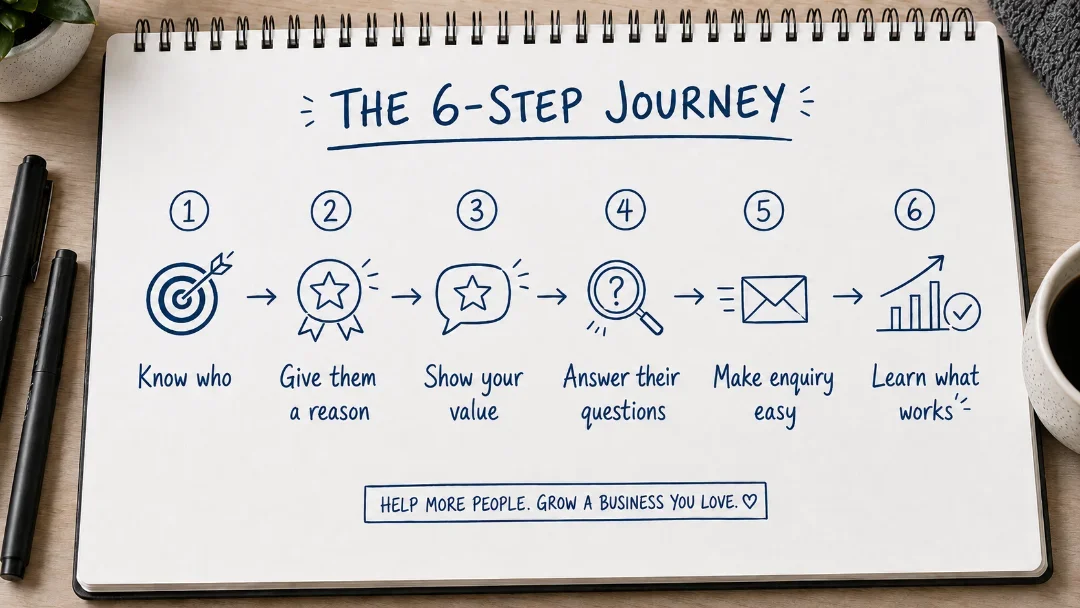
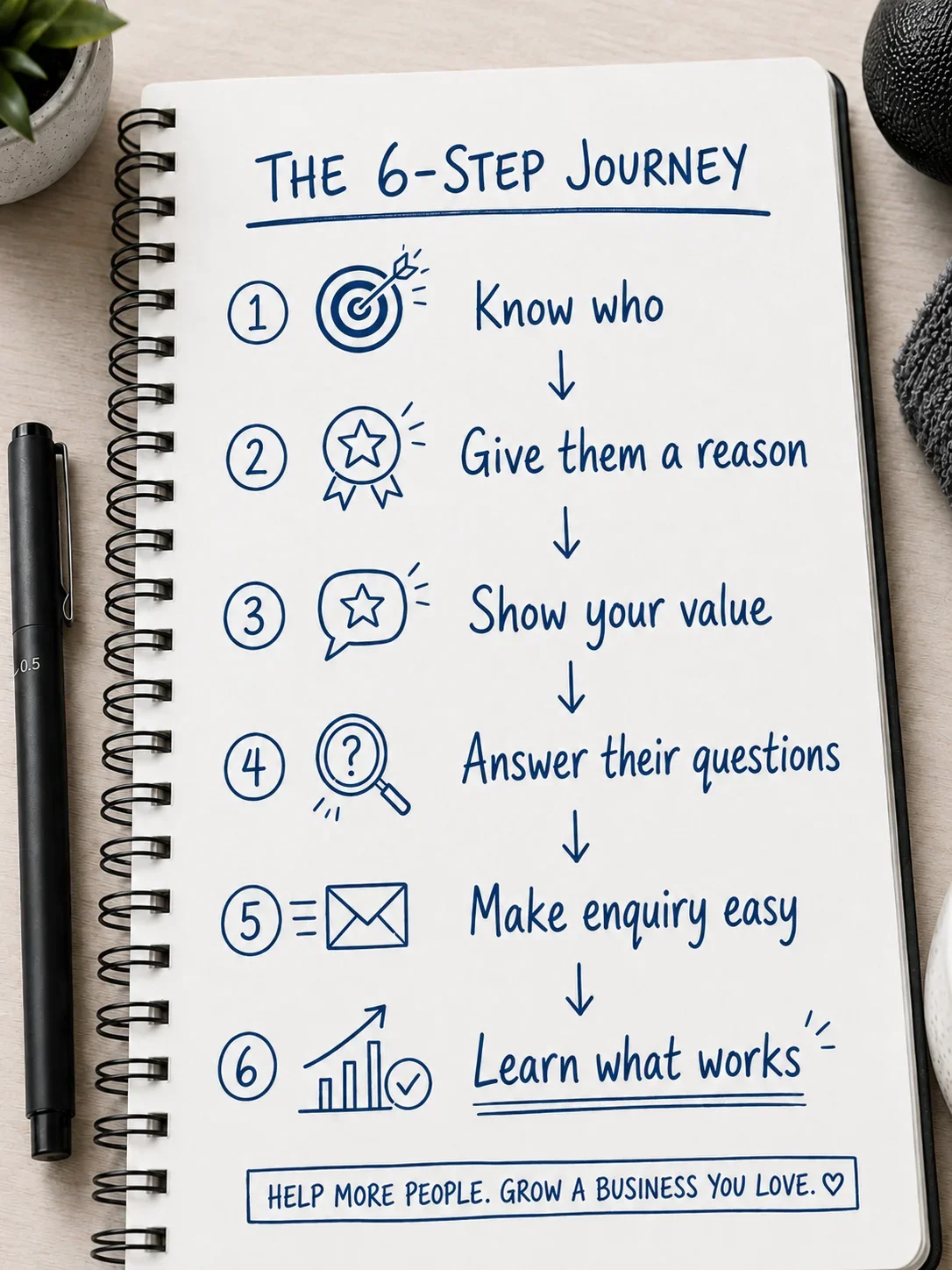
Good marketing starts with six fairly simple things:
Knowing who you want to help
Giving them a reason to choose you
Showing them what you know
Talking about things they actually care about
Making it easy to get in touch
Keeping track of what works.
Get those right first. You can add the clever stuff later.
1. Know exactly who you’re trying to help
Imagine standing in the middle of a massive crowd and shouting:
“Does anyone need a Personal Trainer?”
Somebody probably does.
The trouble is, most of the crowd aren’t listening. Some are too far away to hear you, some aren’t interested, and some might need a PT but don’t realise you’re talking to them.
Now imagine standing in front of a smaller group of people who are trying to get back into strength training after years away from the gym.
You say:
“Does anyone here want to get stronger but feel completely out of place walking into the weights area?”
You’ve spoken to fewer people, but far more of them are likely to think:
That’s me.
That’s what targeting your marketing is really about.
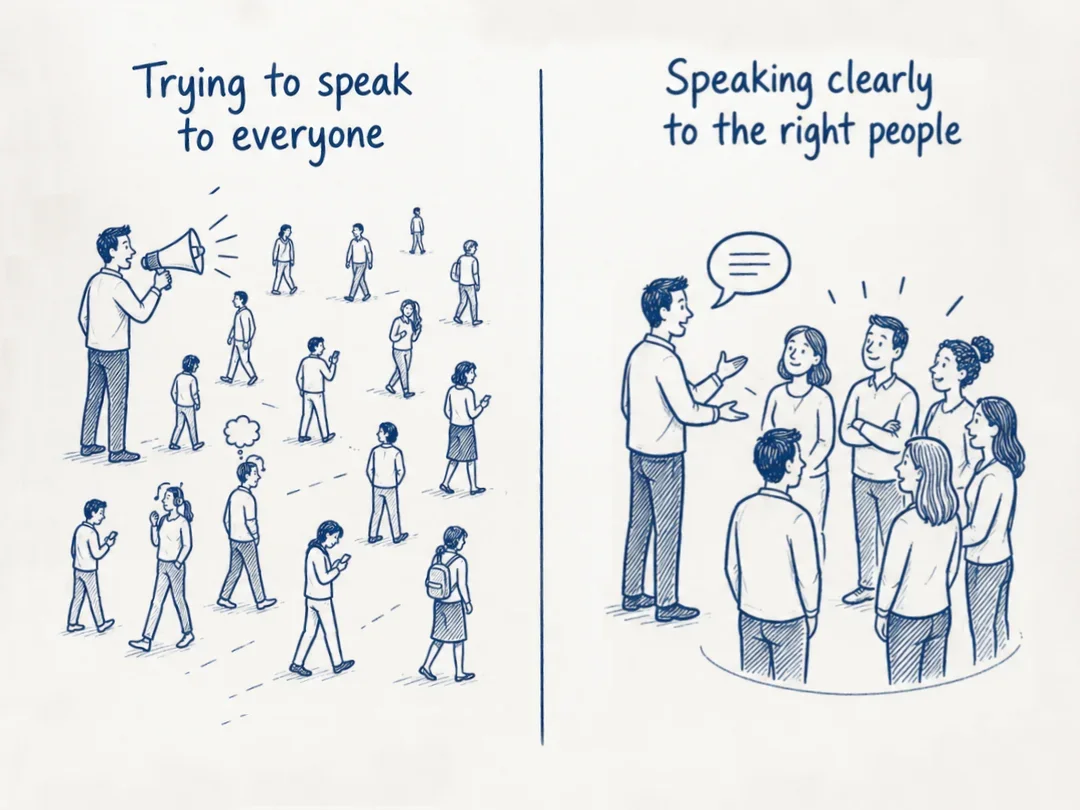
It doesn’t mean you have to turn everyone else away. A PT who specialises in helping beginners can still train an experienced gym-goer. A Sports Massage Therapist who works with runners can still treat somebody who plays football.
You’re deciding who your marketing is primarily speaking to, and sometimes the easiest place to begin is with people you naturally understand.
If you changed career in your forties, you may understand the worries of somebody doing the same. If you’ve spent years lifting weights, running or playing a particular sport, you already know some of the language and frustrations around it. If you once felt intimidated by gyms yourself, you probably understand things that somebody who has trained confidently since they were 16 might overlook.
That affinity can be a quick win.
But it isn’t a rule.
Your ideal client doesn’t have to be your age, look like you or have exactly the same background. What matters is that you understand the problem they are trying to solve and are well placed to help them with it.
Before worrying about logos, hashtags or how many times to post this week, get clear on that.
Who are you trying to help, and what are they actually looking for help with?
2. Build a brand around the business you actually want
Once you know who you want to work with, the next question is how you want them to know you.
This is where people often get caught up in business names.
Should you be “Joe Bloggs Personal Training”, or should you invent a completely separate brand?
There isn’t one right answer.
If you intend to stay as a solo PT and people are effectively buying your time, personality and coaching style, a personal brand can work really well. Your face is already going to be part of the service, so there’s little point pretending it isn’t.
The same can apply to a self-employed Sports Massage Therapist building their own client base.
Except, what if the longer-term plan is different?
Perhaps you eventually want your own facility. Maybe you want several PTs working underneath one brand, or a clinic with massage therapists, physios and other services. You might want a business that can continue growing without every customer expecting to work personally with you.
In that case, building everything around your own name may not be the best fit.
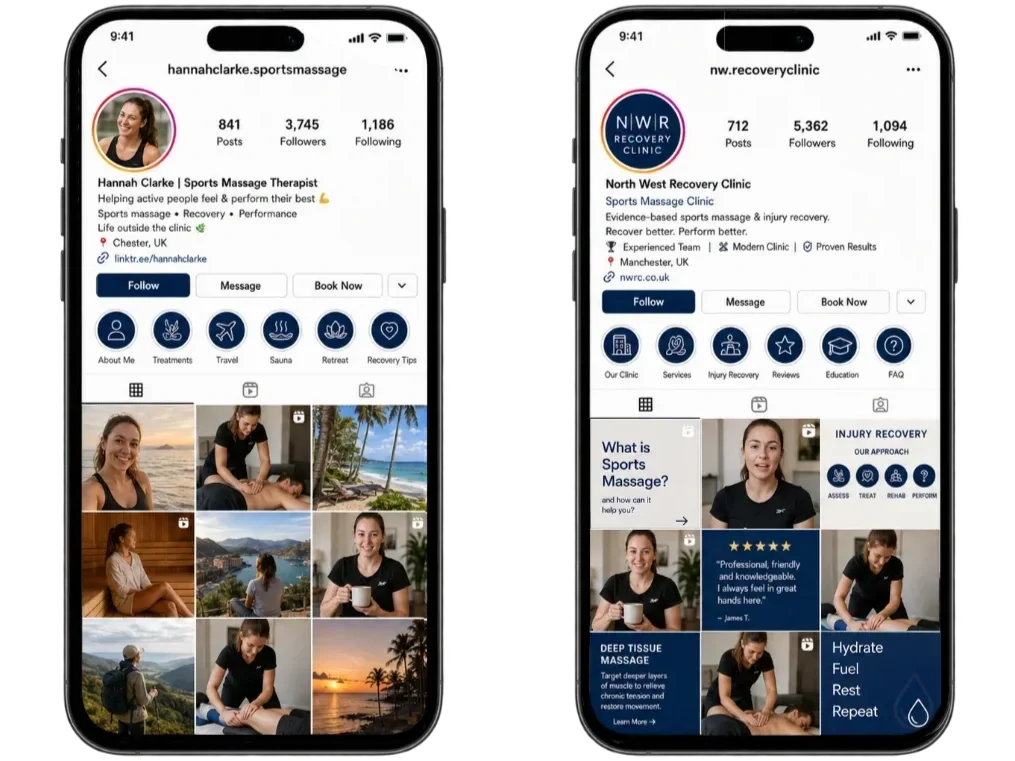
Personal brand on the left and business brand on the right
The better question isn’t:
“Which type of brand is best?”
It’s:
“What am I trying to build?”
Your branding should support that.
Ultimately, whichever route you choose, don’t disappear down a rabbit hole choosing fonts, colours and logos before you can explain what your business actually does.
A good-looking brand with no clear message is still an unclear business.
People should be able to get a fairly quick sense of who you help, what you offer and what makes your approach relevant to them.
The logo can come after that.
3. Show people what you know instead of constantly telling them
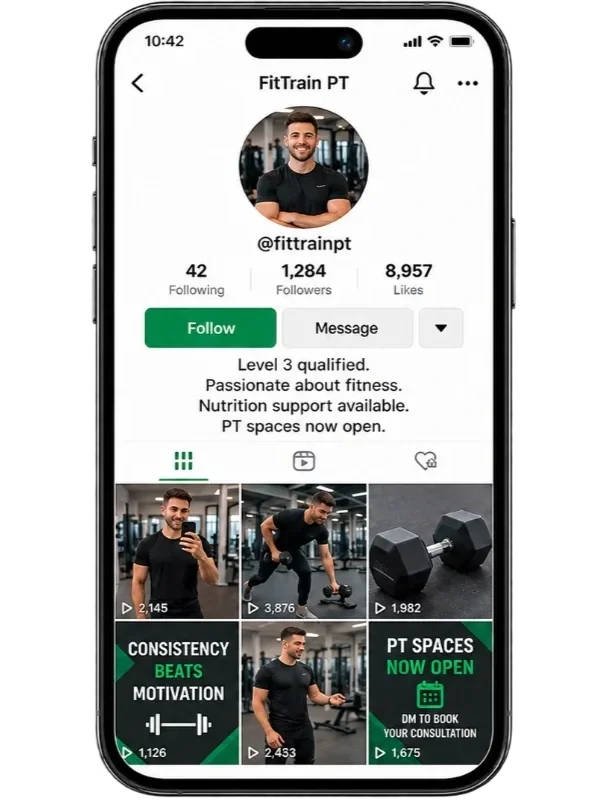
Scroll through enough fitness accounts, and you’ll see plenty of this:
Level 3 qualified.
Passionate about fitness.
Nutrition support available.
PT spaces now open.
None of those things are necessarily bad.
They just don’t show a person or business very much.
Imagine another PT posts a short video showing a squat variation and explains:
“I wouldn’t automatically put every new client under a barbell. If somebody is nervous about the gym, struggles with the movement or simply isn’t ready for it yet, I might start here instead, and this is why.”
Now that potential client has seen something different.
They’ve seen how that trainer thinks.
The same applies to Sports Massage.
Anybody can post a picture of a treatment room and write “appointments available Friday”.
Or.
You can also explain why you ask certain questions during a consultation, what you are looking for during an assessment, why treatment might differ between two people or when something falls outside your professional scope and needs referring elsewhere.
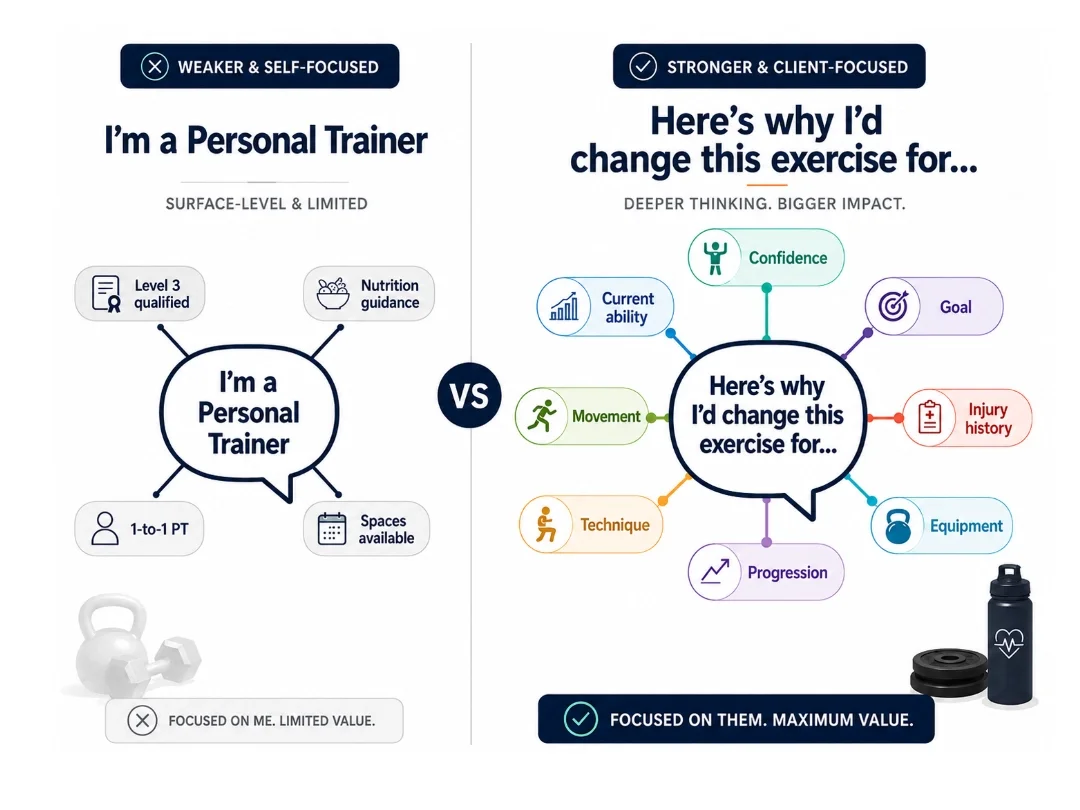
That demonstrates far more than repeatedly saying you are qualified.
This is where useful education becomes part of your marketing.
You can show exercise technique. Explain a common misconception. Talk through part of your process. Break down something technical into normal language. Answer a question that comes up regularly with clients.
You don’t need to give somebody an entire programme or diagnose them through Instagram (you really shouldn’t do that).
There is a difference between giving away your service and giving somebody enough useful information to recognise that you know what you’re doing.
Also, knowing where your professional boundaries are can demonstrate expertise just as much as knowing the answer.
4. Stop guessing what people want you to post about
Once you decide to create useful content, another problem appears. What on earth are you supposed to talk about every week?
This is where people start forcing content because they’ve been told they have to post three, five or seven times a week. I’ve been there, and it’s not fun.
So believe me when I say there’s an easier place to start.
Listen to your customers.
Think about the conversations you already have with classmates, family, friends and clients. A new PT client might ask:
“Do I need to get fit before I start Personal Training?”
There’s a piece of content.
Someone enquiring about massage asks:
“Is sports massage supposed to hurt?”
There’s another.
Someone may want to know what to wear, how an initial consultation works, whether they need gym experience or how long an appointment takes.
They might seem like basic questions to you because you work in the industry, but they aren’t basic to the person asking them.
Sometimes answering those small questions is exactly what helps someone feel comfortable enough to make an enquiry. There’s a reason why websites have a “Frequently Asked Questions” page.
Once you’ve listed all the questions you’ve come across, you can then look beyond your own conversations.
Head over to Google, type the beginning of one of those questions into the search bar, and see what it suggests. Look at the questions that appear in search results. Read comments, reviews and discussions around businesses like yours.
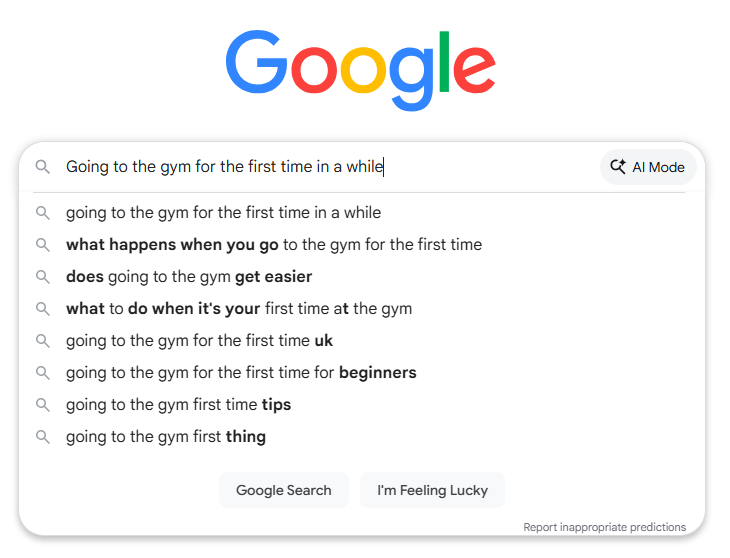
With all this, remember that the point isn’t to blindly make content about whatever gets searched most. It’s to stop sitting there staring at a blank Canva screen trying to invent what people might care about.
Your customers will normally tell you.
One good question can also go much further than one Instagram post.
“Do I need to be fit before starting PT?” might become a short video today, an FAQ on your website next week (if you have one) and eventually a full article for people who are nervous about starting.
That is a much better content system than constantly chasing the next trend.
Another social media trap is remembering that your feed isn’t necessarily your customer’s feed.
If you work in fitness or are even interested in fitness, the algorithm will probably show you far more fitness content than the average person sees. That can make certain topics, trends and styles feel much more mainstream than they really are.
Before copying what other trainers or therapists are posting, ask whether it is genuinely useful to your target customer, or whether it mainly interests other people in the industry.
5. When somebody is interested, don’t make them work for it
You’ve reached the right person.
They understand what you offer.
They’ve watched a few of your videos, read one of your posts and decided they quite like the way you work.
They’re ready to enquire.
This is a surprisingly easy point to lose them.
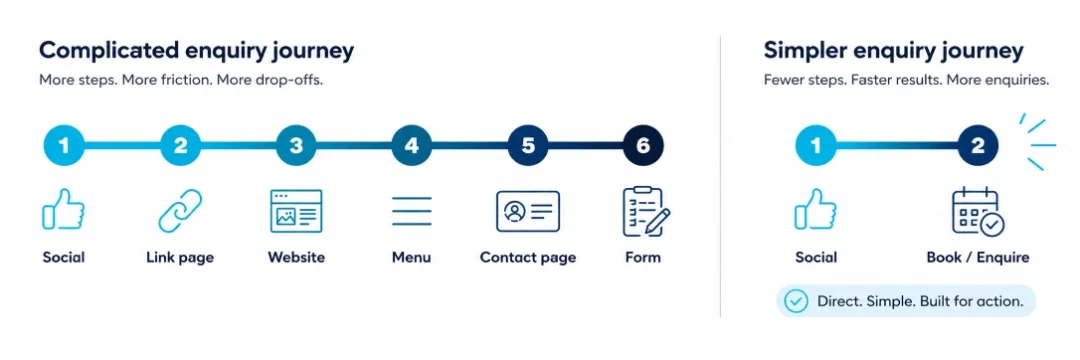
We’ve all been on websites where you have to hunt around for the phone number, or social profiles that tell you to “click the link in bio”, which takes you to another page containing eight more links.
If somebody wants to give you their business, make the next step obvious.
That might be a WhatsApp message. It could be a short enquiry form, a booking page, a telephone call or an initial consultation.
There’s no prize for making the customer jump through more hoops.
That doesn’t mean you should avoid technology.
Quite the opposite.
A decent website or even a simple one-page Linktree can answer questions while you’re working with somebody else. An online booking system can remove the back-and-forth of finding an appointment. If you’ve got, or are looking to set up, a clinic or studio, a Google Business Profile can help local customers find you through Google Search and Maps.
The test is simple:
“Is this making things easier for the customer, or have I added it because somebody told me my business needs it?”
Start with a clear route into the business. Build around it as you grow.
6. Find out whether your marketing is actually working
This is the bit that often gets forgotten because, let’s be fair, tracking numbers is usually less exciting than coaching a client or making a Reel.
If you’re posting, running ads, handing out leaflets and updating your website, you also need some idea of what is actually bringing people in.
Start simple.
Use different links where you can for places like Instagram, TikTok, email or WhatsApp. Tools such as Meta Business Suite, Buffer and Metricool can help you manage content and messages too, but don’t stop at clicks and messages.
A message isn’t a client.
Keep a simple record of where enquiries came from and what happened next. Did they book? Did they pay? Did they come back?
And remember that not every enquiry starts online. Someone might see you in the gym, hear about you from a client or spot a poster at a local club.
That’s why one of the most useful questions you can ask is:
“How did you hear about me?”
We ask you the same thing when you enquire with us.
A spreadsheet is enough to begin with. You don’t need complicated software. Once you have some data, you can start testing things too. Try one CTA against another, or a video against a graphic, and see what leads to more useful enquiries. Just change one thing at a time. Otherwise you won’t know what made the difference.
Finally, keep the end goal in sight.
A Reel with 20,000 views from people nowhere near you might look impressive. Two local enquiries from people ready to pay are probably worth more.
Views and likes show attention. Enquiries, bookings and repeat clients show whether the marketing is actually working.
You don’t need to become a marketer to market yourself well
If you’ve gotten to the end of this blog. I hope I’ve not overwhelmed you. Marketing, especially when you don’t know where to start, but every decision is ultimately yours to make, can be just that. Overwhelming.
When you’re newly qualified, it’s also very easy to look at established health and fitness businesses and think you need everything they have.
A website. Five social platforms. Professional photography. Email marketing. Ads. Automations. A CRM. Client Platform App. A podcast because apparently everyone needs one of those now as well.
You don’t.
Start with the basics.
Know who you want to help. Make it clear why your service is relevant to them. Let people see that you know your job. Talk about the questions they actually have. Give them an obvious way to contact you. Then keep enough information to work out what is bringing clients in.
You can build the rest when there’s a reason to.
Good marketing isn’t about shouting louder than every other PT or Sports Massage Therapist in your area.
It’s about making sure the right people hear you, and understand why they might want to work with you.